Cryebis
If you can read this, your browser is unable to properly import or use
Cascading Style Sheets (CSS). Please upgrade to a more modern browser.
Our cryogenic electron-beam ion source makes slow, highly-charged ions.

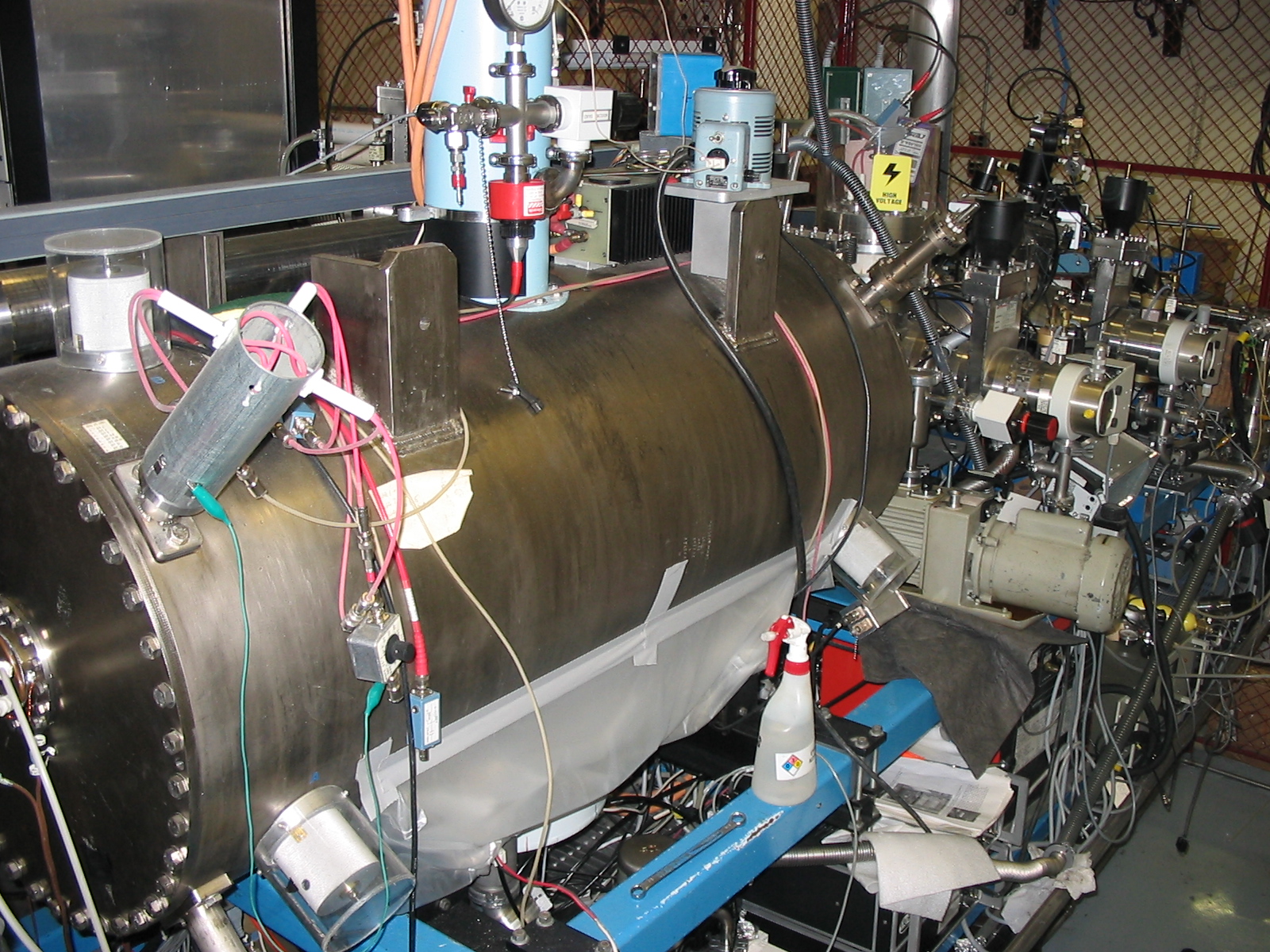
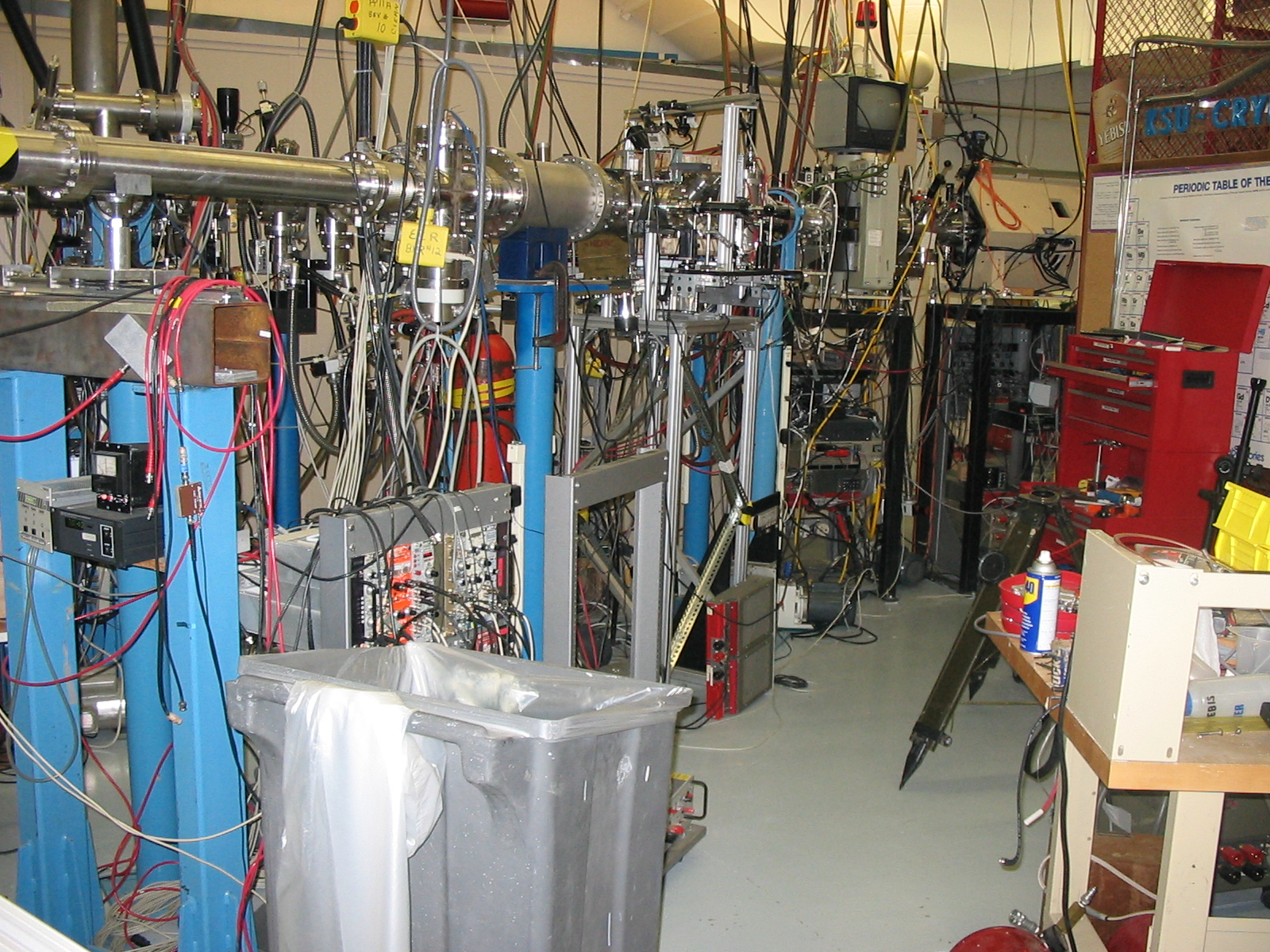
See more photos of the Cryebis in our Photo Gallery.
(In late 2022 we're finally deconstructing Cryebis to make room for infrastructure improvements. See our special photo gallery to follow our demolition and reconstruction progress.)
The Cryogenic Electron Beam Ion Source (Cryebis) is a plasma device designed to generate very highly-charged ions at low velocity. This makes it an excellent complement to the larger high-velocity machines in the laboratory, the Tandem and the Linac .
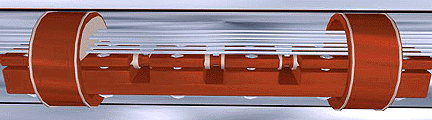
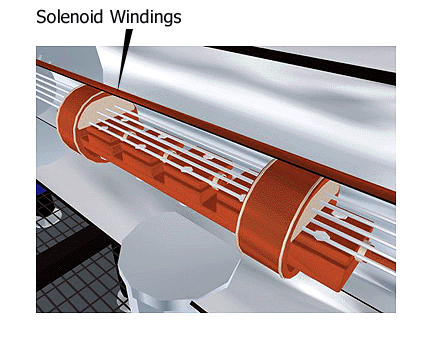
Cryebis consists of an electron gun that fires a space-charge-limited beam down the bore of a high-field superconducting solenoid. The solenoidal field acts to compress the electrons into the flow regime known as "Brillouin flow". Arrayed around the beam, down the bore of the solenoid are sets of cylindrical electrodes (see cutaway drawings from the side and from above). Collisionally ionized atoms are trapped radially by the space-charge of the electron beam and axially by the fields put on the electrodes. Continuous bombardment of the trapped ions results in high charge states. When the ions have "cooked" enough, the fields on the electrodes can be ramped to expel them. The ions are magnetically analyzed and directed through a beamline switchyard to experiments.
One of those beamlines can intersect with another from the ECR source and allow unique studies of ion-ion collisions. Together, the EBIS and ECR constitute the JRM Low Energy Ion Collision Facility (LEICF).
A tutorial on Cryebis operations was created as part of our contribution to the APS Centennial celebration in March 1999.
The Cryebis/LEICF project is managed by Charles Fehrenbach.
Last updated on Monday, 28-Nov-2022

